The appearance of U.S. Department of Defense (DoD) and industry visual information does not imply or constitute endorsement.
Explore the Course Offering
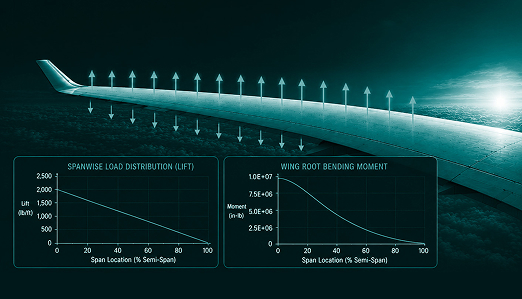
Aircraft External Loads
Course Length: 3 Days
Comprehensive overview of aircraft loads development, including maneuver, gust, buffet, ground, and landing impact; design/ultimate loads and repeated loads.
Covers:
Loads criteria and regulatory foundations
Time- and frequency-domain analysis
Aeroelastic considerations
Model development and validation
Practical, real-world problem solving
Outcome: Engineers understand how loads are generated, modeled, and validated for structural design.
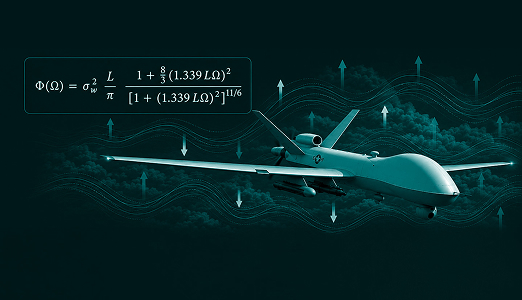
Aircraft Gust Loads
Course Length: 3 Days
Advanced gust modeling for discrete and continuous turbulence environments.
Topics include:
Statistical foundations
Gust spectra development
Verification and validation
Application to fatigue testing
Integration into structural life analysis
Outcome: Clear understanding of gust-driven loading and its role in design and life-cycle modeling.
Loads for Non-Loads Engineers
Course Length: 2 Days
High-level overview of aircraft loads and how they influence structural decisions.
Designed for:
Stress, design, and flight test engineers
Program leadership
Cross-disciplinary teams
Outcome: Shared technical baseline across the program. Aircraft Structures: Loads, Strength, Durability & DADT Supports teams connecting loads and fatigue theory to fleet-level life-cycle oversight.
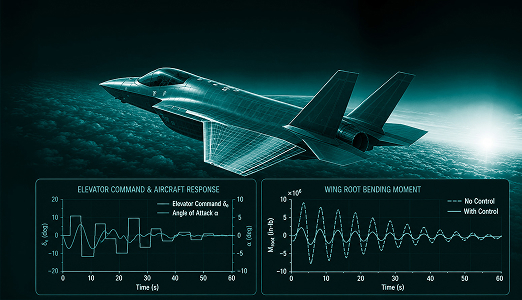
Aeroservoelasticity for Aircraft Loads Analysis
Course Length: 1.5–2 Days
Interaction of aerodynamic forces, structural flexibility, and control systems.
Aeroelastic coupling
Control system influence on loads
Loads reduction strategies
Modeling considerations
Outcome: Engineers understand how flight controls and structural dynamics influence final loads environments.
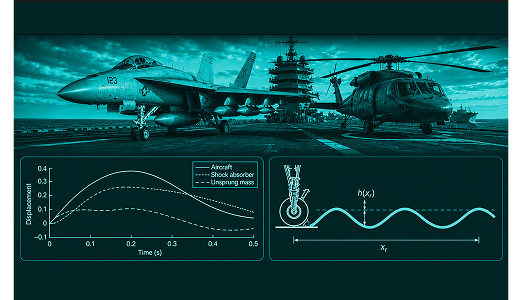
Ground Loads for Fixed & Rotary-Wing Aircraft
Course Length: 2 Days
Design criteria and analytical prediction of ground loads for shore-based and shipboard operations.
Covers:
Static and fatigue ground loads criteria
Dynamic model development
Certification considerations
Lessons learned from fleet programs
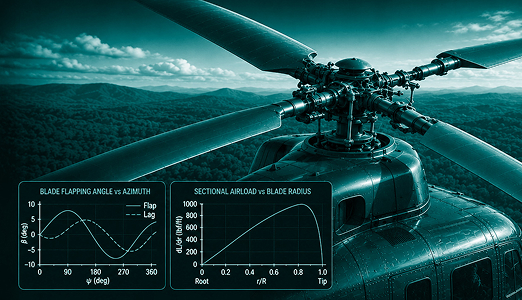
Rotary-Wing Aeromechanics
Course Length: 3 Days
Rotorcraft aerodynamics, structural dynamics, flight control, performance, and system design fundamentals.
Strength & Durability of Aircraft Structures
Course Length: 3-4 Days
In-depth exploration of fatigue behavior, fracture mechanics, and durability-based design.
Covers:
Crack initiation and crack growth modeling
Safe-life, fail-safe, total-life, and defect-tolerant methods
Coupon, component, and full-scale testing
Service loading analysis
Real-world case studies
Outcome: Engineers gain the physical and analytical foundation needed for defensible fatigue-life decisions.
Why Programs Invest in TDA Training
Establish a shared technical baseline
Improve life-cycle decision consistency
Reduce misinterpretation of loads and fatigue data