ACTS SOFTWARE

Centralized Dynamic Component Tracking for Mission-Critical Fleets

Fragmented tracking systems create compliance risk, configuration errors, and grounded aircraft.

ACTS provides a unified, DoD-authorized platform for tracking 
life-limited and dynamic components, giving fleet managers real-time visibility and defensible life-cycle control.

When component data is uncertain, aircraft availability suffers.

the problem

the problem

When defense aviation programs rely on:


  • Manual logbooks
  • Disconnected spreadsheets
  • Legacy databases
  • Delayed flight-hour updates

the result

the result

  • Incomplete component history
  • Configuration discrepancies
  • Overfly risk
  • Audit exposure
  • Reduced readiness

the solution

the solution

ACTS establishes a single source of 
truth for dynamic component life-cycle management by centralizing:


  • Aircraft configuration state
  • Life-limited component tracking
  • Usage-based damage accounting
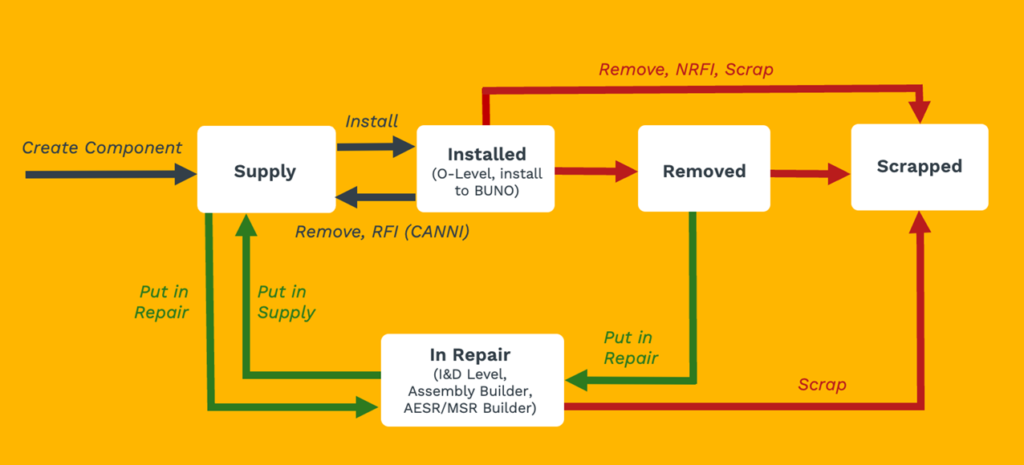
  • Installation and removal history
  • Audit traceability

How ACTS Works

ACTS tracks dynamic components whose service life is driven by:
Flight hours • Landings • Time/cycle codes • Usage-based criteria

Core Capabilities

Dynamic Component Tracking

Dynamic Component Tracking

Usage-based life-cycle monitoring tied to actual flight data.

Aircraft Configuration Management

Aircraft Configuration Management

Real-time visibility of installed components across the fleet.

Data Integrity Controls

Data Integrity 
Controls

Prevents double installs and invalid configuration states.

Complete Component History

Complete Component History

Full life-cycle traceability — installation, removal, repair, and usage.

Comprehensive 
Reporting

Comprehensive Reporting

Pre-built configuration and high-time component reports.

Complete
Audit Trail

Complete
Audit Trail

User-level logging of every configuration event.

Proven at operational scale.


In service since 2017, ACTS supports:

aircraft
0 +
tracked components
0 +
in cost avoidance*
0 Million
fleets
H- 60 & V-22

Working with USN, USMC, USAF, FMS Partners (Australia, Denmark, Japan),
and OEMs including Boeing, Bell, Sikorsky/Lockheed Martin, Parker Hannifin, Moog, and Yulista.


*The U.S. Navy estimates approximately $121M in savings for the H-60 (2018), plus over $125M in NAE savings each year based on incorporation of other rotary- and fixed-wing aircraft.

Technical & Compliance Framework

Platform Architecture
DoD cloud-based; migrating to AWS GovCloud.

Compliance

Authorized under 4790/NAMP.

Meets DoD policies and accreditation requirements (DADMS ID, ATO).

Integration

Integrated with USAF flight-hour systems.

Open architecture for additional system integrations.

Deployment

Ready for immediate rollout: configure T/M/S PMIC and upload component data.
Frequently Asked Questions:

How does ACTS prevent configuration errors?

Built-in validation rules enforce component eligibility and prevent duplicate installations before records are saved.

Can ACTS integrate with our flight-hour system?

Yes. ACTS is integrated with USAF systems and supports additional 
integration pathways.

Is ACTS limited to rotary-wing platforms?

Currently deployed on H-60 and V-22 platforms, with configurable architecture for additional T/M/S environments.

How quickly can ACTS be implemented?

Once PMIC configuration is complete and initial component data is uploaded, programs can begin using ACTS immediately.